
Lost Filling in Cincinnati, OH
━━
A lost filling leaves your tooth vulnerable to sensitivity, decay, and fracture. Replacing it promptly helps protect your tooth from further damage.
What Should You Do If a Filling Falls Out?
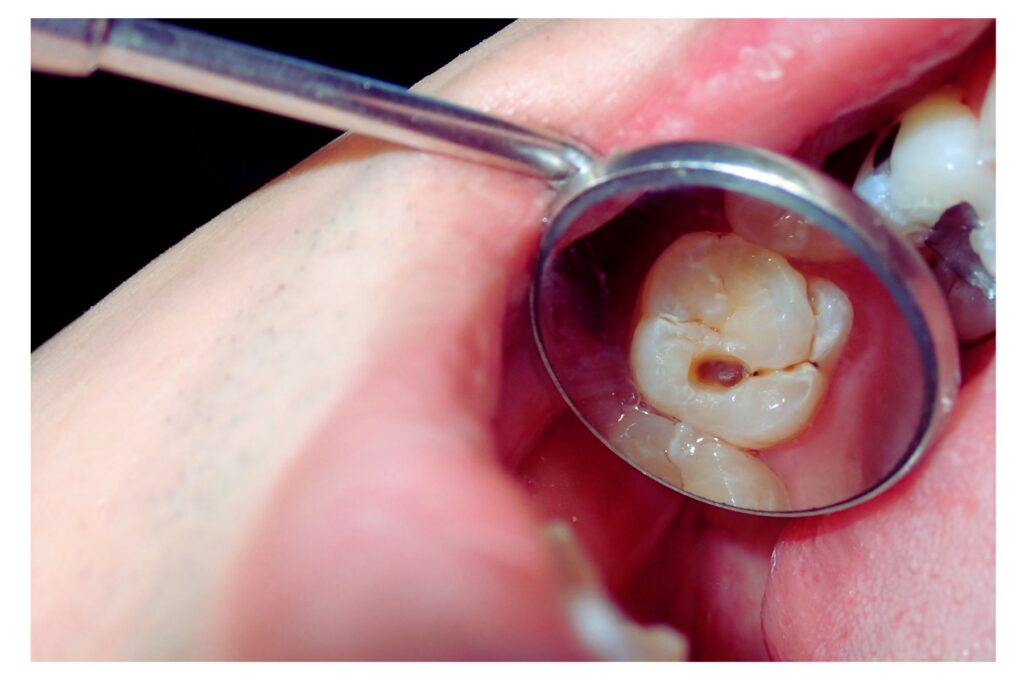
Losing a filling can be surprising, especially if it happens while eating or brushing your teeth. You may suddenly notice a hole in your tooth, sensitivity to hot or cold, or a rough edge with your tongue.
The good news is that a lost filling does not always mean you’ll need a crown or root canal. In many cases, the tooth can be restored successfully. The key is having the tooth evaluated before additional damage or decay occurs.
At Total Dentistry, Dr. Christopher Omeltschenko performs a comprehensive examination to determine why the filling failed and recommend the most conservative treatment to restore your tooth and protect it for the long term.
Why Do Fillings Fall Out?
Fillings are durable, but they don’t last forever.
Common reasons a filling may come loose include:
- Normal wear over time
- New decay developing around the filling
- A fracture in the filling or tooth
- Heavy biting forces from grinding or clenching
- A filling that has become loose with age
- Biting on something hard or sticky
Sometimes the filling is the only thing that breaks. In other cases, part of the tooth may break away along with the filling.
Signs and Symptoms
After losing a filling, you may notice:
- A hole or missing piece in the tooth
- Sensitivity to hot or cold
- Pain when chewing
- A rough or sharp edge
- Food getting trapped in the tooth
- Mild discomfort or no symptoms at all
Some patients experience very little pain, even when the tooth requires treatment.
When Should You See a Dentist?
You should schedule an examination as soon as possible if:
- A filling has fallen out.
- The tooth is sensitive or painful.
- It hurts to bite down.
- Part of the tooth broke along with the filling.
- Food constantly becomes trapped in the area.
Even if the tooth isn’t uncomfortable, replacing the filling promptly can often prevent more extensive treatment.
How Is a Lost Filling Diagnosed?
When a filling is lost, it’s important to determine whether the remaining tooth is still healthy enough for another filling or whether additional treatment is needed.
During your examination, Dr. Omeltschenko may evaluate:
- Digital X-rays
- Clinical photographs
- Remaining tooth structure
- Signs of new decay
- Cracks or fractures
- Existing restorations
- Bite alignment
Our goal is to understand not only why the filling came out, but also what can be done to help the repaired tooth last as long as possible.
What Happens If a Lost Filling Is Left Untreated?
A lost filling leaves the tooth less protected.
Without treatment, the tooth may:
- Become increasingly sensitive
- Develop additional decay
- Fracture
- Allow bacteria to reach the nerve
- Require a larger filling, crown, or root canal
- Eventually become non-restorable
Replacing the restoration early often allows for simpler, more conservative treatment.
Possible Treatment Options
Treatment depends on the condition of the remaining tooth.
Possible treatment options include:
- New Tooth-Colored Filling – If enough healthy tooth structure remains, a new filling may be all that’s needed to restore the tooth.
- Same-Day Crown – If the tooth has lost significant structure or is at risk of fracturing, a crown may provide better long-term protection than another filling.
- Root Canal Therapy – If bacteria have reached the nerve or the tooth has become permanently inflamed, root canal therapy may be necessary before restoring the tooth.
- Tooth Extraction – In rare cases where the tooth is severely damaged and cannot be predictably restored, extraction may be the best long-term option.
Whenever possible, our goal is to preserve your natural tooth using the most conservative treatment that offers long-term success.
What Should I do Until My Appointment
- Avoid chewing on that side if possible.
- Keep the area clean by brushing gently and rinsing after meals.
- If the tooth is sensitive, avoid very hot, cold, or sugary foods.
- If the tooth has a sharp edge that’s irritating your tongue or cheek, dental wax (available at most pharmacies) may provide temporary relief.
- Do not try to glue the filling back in yourself.
Looking Beyond the Lost Filling
A filling usually doesn’t fall out for no reason.
Sometimes the filling has simply reached the end of its lifespan. In other cases, decay, tooth fractures, grinding, clenching, or excessive biting forces may have contributed to its failure.
Understanding why the filling was lost helps us recommend treatment that not only repairs the tooth but also reduces the risk of future problems.
Related Conditions
Related Services
Frequently Asked Questions
Continue Exploring
━━━━━
Do I Need a Filling or a Crown? →
Learn how dentists determine whether a filling or crown is the best treatment for your tooth.
How Long Do Tooth-Colored Fillings Last? →
Discover how long composite fillings typically last and what can affect their lifespan.
Can a Filling Turn Into a Root Canal? →
Find out how untreated decay or a damaged filling can lead to the need for root canal treatment.
What Happens If You Don’t Replace a Lost Filling? →
Learn why a lost filling should be replaced promptly to help prevent further damage and decay.
Why Do Fillings Fall Out? →
Explore the most common reasons fillings fail and how they can often be prevented.
Ready to Get Started?
━━
A lost filling doesn’t always require extensive treatment, but it should be evaluated before the tooth becomes more damaged. In many cases, prompt care allows us to restore the tooth with a simple, conservative solution.
If you’ve lost a filling, schedule an examination with Dr. Christopher Omeltschenko. We’ll determine why the filling came out, explain your treatment options, and help you protect your tooth for years to come.