
Broken Tooth in Cincinnati, OH
━━
A broken tooth should be evaluated as soon as possible. Early treatment often helps prevent additional damage and preserve your natural tooth.
What Should You Do If You Break a Tooth?
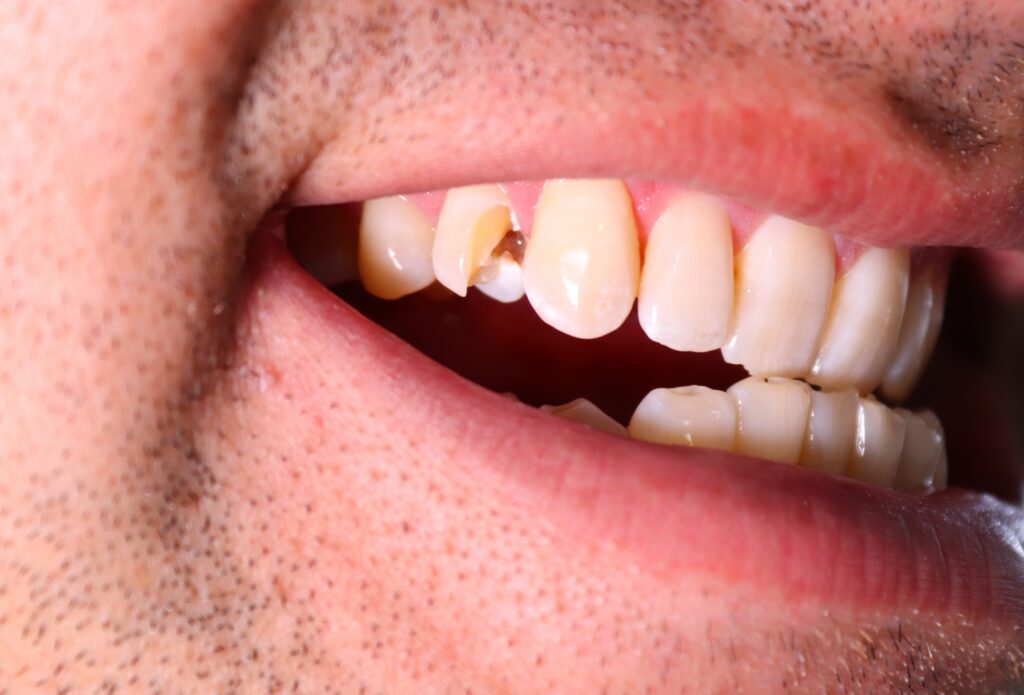
Breaking a tooth can happen unexpectedly while eating, playing sports, grinding your teeth, or simply biting down on something hard. Sometimes the damage is minor, while other times the break exposes the nerve inside the tooth and requires prompt treatment.
The good news is that many broken teeth can be successfully repaired. The key is identifying the extent of the damage and treating the tooth before the problem becomes worse.
At Total Dentistry, Dr. Christopher Omeltschenko performs a comprehensive examination to determine the cause and severity of the fracture, then recommends the most conservative treatment designed to restore your tooth and protect it for the long term.
What Causes a Tooth to Break?
Teeth are incredibly strong, but they are not indestructible.
Common causes of broken teeth include:
- Biting hard foods such as ice, popcorn kernels, or hard candy
- Large fillings that weaken the remaining tooth structure
- Untreated tooth decay
- Teeth grinding or clenching
- Cracked teeth that worsen over time
- Trauma from a fall or accident
- Normal wear and aging
Sometimes a tooth breaks suddenly, while in other cases it has been weakening for years before finally fracturing.
Signs and Symptoms
A broken tooth may cause:
- A missing piece of the tooth
- A sharp or rough edge
- Pain when biting or chewing
- Sensitivity to hot or cold
- Sensitivity to sweets
- A visible crack or fracture
- Swelling around the tooth
Some broken teeth cause very little discomfort, while others can be quite painful depending on how deep the fracture extends.
When Should You See a Dentist?
You should schedule an examination as soon as possible if:
- A piece of your tooth has broken off.
- The tooth is painful or sensitive.
- It hurts when you bite down.
- You notice swelling around the tooth.
- The broken edge is cutting your tongue or cheek.
Even if the tooth isn’t painful, a broken tooth should be evaluated before the damage progresses.
How Is a Broken Tooth Diagnosed?
Determining whether a tooth can be repaired begins with a thorough examination.
During your visit, Dr. Omeltschenko may evaluate:
- Digital X-rays
- Clinical photographs
- The location and depth of the fracture
- Existing fillings or crowns
- The health of the tooth’s nerve
- Bite alignment
- Gum health
Our goal is not only to repair the broken tooth but also to understand why it broke in the first place. Factors such as tooth decay, grinding, large fillings, or bite problems may all contribute to fractures and should be addressed whenever possible.
What Happens If a Broken Tooth Is Left Untreated?
A broken tooth rarely repairs itself.
Without treatment, the fracture may:
- Become larger
- Allow bacteria to enter the tooth
- Lead to nerve inflammation or infection
- Cause pain while chewing
- Result in a dental abscess
- Require more extensive treatment
- Become impossible to restore
Treating a broken tooth early often allows for simpler, more conservative treatment.
Possible Treatment Options
Treatment depends on the location and severity of the fracture.
Possible treatment options include:
- Tooth-Colored Filling – Small fractures or chips may be repaired with bonded composite resin.
- Same-Day Crown – Larger fractures often require a crown to strengthen and protect the remaining tooth. Crowns are commonly recommended when a significant amount of tooth structure has been lost.
- Root Canal Therapy – If the fracture extends into the nerve or the nerve becomes permanently inflamed, root canal therapy may be necessary before restoring the tooth.
- Tooth Extraction – Some fractures extend too far below the gumline or split the tooth in a way that cannot be predictably repaired. In these cases, extraction may be the best long-term option. Replacement options such as a dental implant or bridge can then be discussed.
Whenever possible, our goal is to preserve your natural tooth while providing treatment that offers long-term success.
Frequently Asked Questions
Continue Exploring
━━━━━
Can a Crown Save a Broken Tooth? →
Learn when a dental crown can restore a broken tooth and when other treatment may be necessary.
Do I Need a Filling or a Crown? →
Understand the differences between fillings and crowns and how dentists determine which treatment is best.
Root Canal vs. Extraction: Which Is Right for You? →
Compare the benefits, risks, and long-term outcomes of saving a tooth versus replacing it.
What Happens If You Ignore a Broken Tooth? →
Find out why delaying treatment can lead to more serious damage, pain, and costly dental problems.
How Long Can You Wait to Repair a Broken Tooth? →
Learn why prompt treatment is important and how waiting can affect your options for saving the tooth.
Ready to Get Started?
━━
A broken tooth doesn’t always cause immediate pain, but it almost always benefits from prompt evaluation. Early treatment can often preserve more of your natural tooth and help prevent more extensive procedures in the future.
If you’ve broken a tooth, schedule an examination with Dr. Christopher Omeltschenko. We’ll determine the extent of the damage, explain your treatment options, and help you choose the solution that best protects your long-term oral health.