Cracked Tooth in Cincinnati, OH
━━
Cracked teeth aren’t always easy to see, but they can lead to significant problems if left untreated. Early diagnosis improves the chances of saving the tooth.
Understanding Cracked Teeth and Why Early Treatment Matters
A cracked tooth can be one of the most frustrating dental problems because the symptoms often come and go. You may feel a sharp pain when biting, notice sensitivity to cold, or feel discomfort only when chewing certain foods. In many cases, the crack isn’t visible, making it difficult to know exactly what’s causing the problem.
Left untreated, a small crack can gradually become larger, making the tooth more difficult—or sometimes impossible—to save.
At Total Dentistry, Dr. Christopher Omeltschenko performs a comprehensive examination to determine whether a tooth is cracked, identify why it happened, and recommend treatment designed to preserve your natural tooth whenever possible.
What Is a Cracked Tooth?
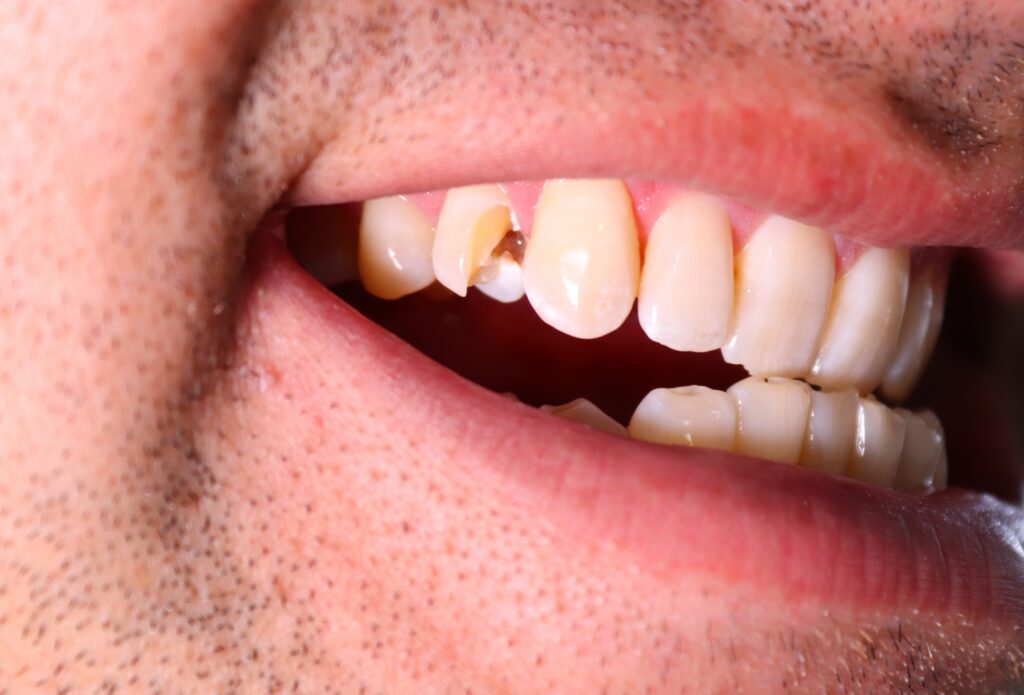
A cracked tooth is a tooth that has developed a fracture extending into the tooth structure. Unlike a chipped tooth, where a portion of the tooth breaks away, a crack often remains hidden and may not be visible during a routine examination.
As you bite and chew, the crack can flex slightly, irritating the nerve inside the tooth and causing pain.
This condition is commonly referred to as Cracked Tooth Syndrome.
What Causes a Tooth to Crack?
Cracked teeth often develop over time rather than from a single event.
Common causes include:
- Teeth grinding or clenching
- Heavy biting forces
- Large fillings that weaken the tooth
- Biting hard foods such as ice or popcorn kernels
- Previous dental treatment
- Normal wear and aging
- Trauma or injury
At Total Dentistry, we don’t just look for the crack—we also look for the factors that caused it. Addressing those contributing factors can help reduce the risk of future fractures.
Signs and Symptoms
Symptoms of a cracked tooth may include:
- Sharp pain when biting down
- Pain when releasing your bite
- Sensitivity to cold
- Occasional sensitivity to sweets
- Pain that comes and goes
- Difficulty chewing on one side
- A tooth that feels “different” but looks normal
Because symptoms are often inconsistent, many patients have a cracked tooth for months before seeking treatment.
When Should You See a Dentist?
You should schedule an examination if:
- It hurts when you bite down.
- Pain occurs when releasing your bite.
- One tooth is sensitive to cold but has no obvious cavity.
- Pain comes and goes without an obvious cause.
- You suspect you’ve cracked a tooth.
Early diagnosis often improves the chances of saving the tooth before the crack progresses.
How Is a Cracked Tooth Diagnosed?
Cracked teeth can be one of the most challenging dental conditions to diagnose because the crack is often too small to see on an X-ray.
During your examination, Dr. Omeltschenko may evaluate:
- Your symptoms
- Digital X-rays
- Clinical photographs
- Bite testing
- Specialized instruments used to identify cracks
- Existing fillings or crowns
- Bite alignment and chewing forces
In many cases, the combination of your symptoms and examination findings allows us to determine whether a crack is present.
What Happens If a Cracked Tooth Is Left Untreated?
A cracked tooth will not heal on its own.
Without treatment, the crack may continue to spread, potentially leading to:
- Increasing pain
- Permanent nerve damage
- Irreversible pulpitis
- A dead tooth nerve (necrotic pulp)
- Tooth abscess
- A fracture that extends below the gumline
- Tooth loss
Treating a cracked tooth early often allows for more conservative treatment and a better long-term prognosis.
Possible Treatment Options
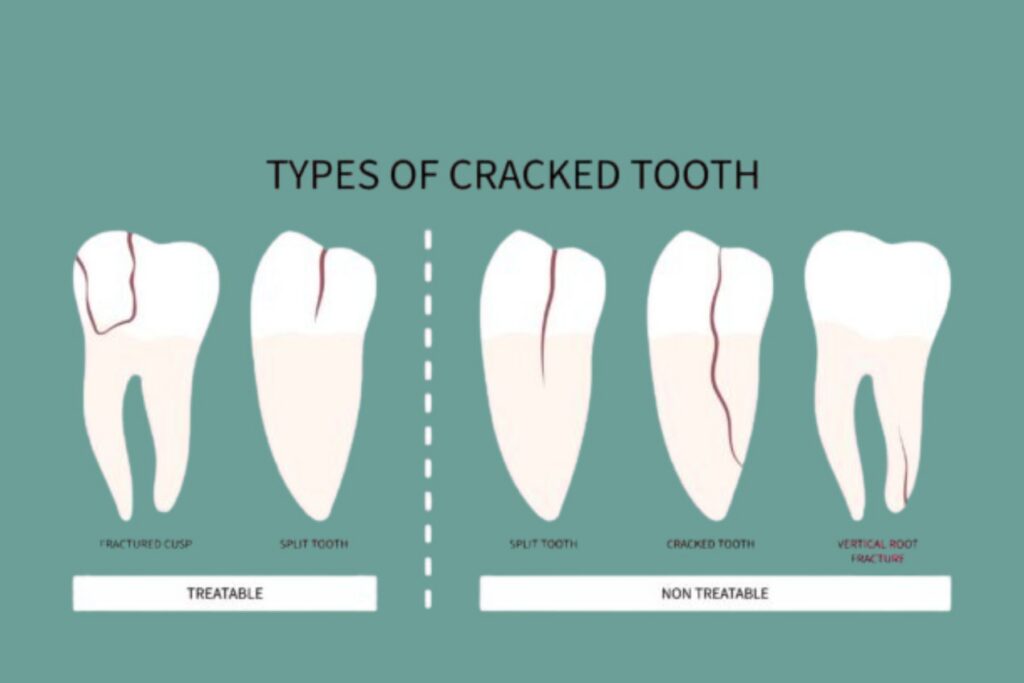
Treatment depends on the location, depth, and severity of the crack.
Possible treatment options include:
- Same-Day Crown – Many cracked teeth can be successfully treated with a crown that holds the tooth together, reducing movement of the cracked segments and protecting the tooth during chewing.
- Root Canal Therapy – If the crack has caused permanent damage to the tooth’s nerve, root canal therapy may be recommended before placing a crown.
- Tooth Extraction – If the crack extends too far below the gumline or splits the tooth in a way that cannot be predictably restored, extraction may be the best long-term option. Replacement options such as a dental implant or bridge can then be discussed.
Our goal is always to preserve your natural tooth whenever it can be predictably restored.
Looking Beyond the Crack
At Total Dentistry, we believe it’s important to understand why a tooth cracked—not just how to repair it.
Many cracked teeth are the result of excessive biting forces, grinding, clenching, worn teeth, or changes in the bite that have developed over many years.
Whenever appropriate, we evaluate the health of your gums, teeth, and bite to help reduce the risk of future fractures and improve the long-term success of your treatment.
Frequently Asked Questions
Continue Exploring
━━━━━
Can a Crown Save a Cracked Tooth? →
Learn when a cracked tooth can be saved with a crown and when more extensive treatment may be needed.
Root Canal vs. Extraction: Which Is Right for You? →
Compare the benefits, risks, and long-term outcomes of saving a cracked tooth versus replacing it.
Why Do Teeth Crack? →
Discover the most common causes of cracked teeth and how to reduce your risk.
Can Teeth Grinding Cause Cracked Teeth? →
Learn how teeth grinding places excessive stress on teeth and increases the risk of cracks and fractures.
What Happens If You Ignore a Cracked Tooth? →
Find out why delaying treatment can allow a crack to worsen and lead to more complex dental problems.
Ready to Get Started?
━━
Cracked teeth rarely improve on their own, and delaying treatment may allow the crack to worsen. Early diagnosis often provides the best opportunity to preserve your natural tooth and avoid more extensive treatment.
If you’re experiencing pain when biting, intermittent tooth pain, or think you may have a cracked tooth, schedule an examination with Dr. Christopher Omeltschenko. We’ll determine the cause of your symptoms, explain your treatment options, and help you choose the solution that best protects your long-term oral health.