
Irreversible Pulpitis in Cincinnati, OH
━━
Persistent tooth pain may be a sign that the nerve inside your tooth has become irreversibly inflamed. Early diagnosis can help relieve pain and save your tooth whenever possible.
What Is Irreversible Pulpitis?
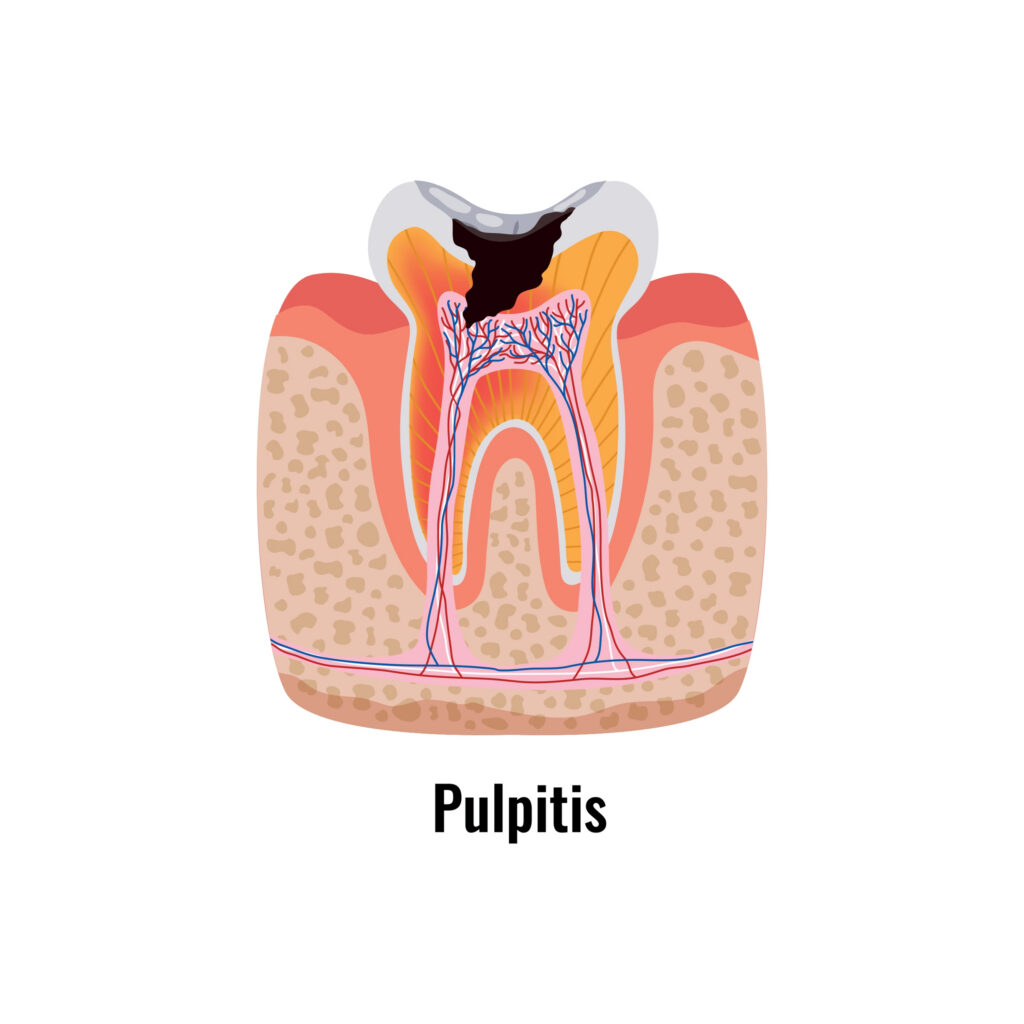
Irreversible pulpitis is a condition in which the soft tissue inside a tooth, known as the dental pulp or nerve, becomes severely inflamed and can no longer heal on its own. The inflammation is usually caused by bacteria entering the tooth through deep decay, a crack, or trauma.
As pressure builds inside the tooth, the nerve becomes increasingly irritated, often resulting in significant pain. Without treatment, the nerve will eventually die, allowing bacteria to spread beyond the tooth and potentially leading to a dental abscess.
Although the name sounds intimidating, irreversible pulpitis is a common dental condition and, in many cases, the tooth can still be successfully saved with prompt treatment.
What Causes Irreversible Pulpitis?
Irreversible pulpitis most commonly develops when bacteria or trauma damage the tooth’s nerve.
Common causes include:
- Deep tooth decay (cavities)
- A cracked or fractured tooth
- Trauma to the tooth
- Large or failing fillings
- Repeated dental procedures on the same tooth
- Excessive wear from grinding or clenching
Because the nerve is unable to heal once the inflammation reaches this stage, treatment is necessary to eliminate the source of the problem.
Signs and Symptoms
Symptoms may include:
- Severe toothache
- Sharp or throbbing pain
- Pain that lingers after drinking something hot or cold
- Pain that wakes you during the night
- Sensitivity when biting or chewing
- Pain that seems to come and go but gradually becomes more frequent
Some patients notice that the pain temporarily subsides before returning with swelling or signs of infection.
How Is Irreversible Pulpitis Diagnosed?
During your examination, Dr. Omeltschenko will determine whether the nerve inside your tooth is healthy, irritated, or no longer capable of healing.
Your evaluation may include:
- Digital X-rays
- Clinical photographs
- Cold testing
- Bite testing
- Examination for cracks or fractures
- Evaluation of existing fillings or crowns
Because several dental conditions can cause similar symptoms, a thorough examination is necessary before recommending treatment.
What Happens If It’s Left Untreated?
Irreversible pulpitis does not heal on its own.
Without treatment, the inflamed nerve will eventually die, allowing bacteria to spread into the bone surrounding the tooth.
This may result in:
- Necrotic (dead) tooth nerve
- Tooth abscess
- Increasing pain
- Swelling of the gums or face
- Bone loss
- Tooth loss
- Spread of infection
Prompt treatment often improves the chances of saving the natural tooth.
Possible Treatment Options
Treatment depends on the condition of the tooth and whether it can be predictably restored.
Possible treatment options include:
- Root Canal Therapy – The most common treatment for irreversible pulpitis. The inflamed nerve is removed, the canals are cleaned and disinfected, and the tooth is sealed to eliminate infection while preserving the natural tooth.
- Dental Crown – Because teeth requiring root canal therapy are often weakened, a crown is commonly recommended afterward to protect the tooth and restore long-term function.
- Tooth Extraction – If the tooth is too severely damaged to be predictably restored, extraction may be the best long-term option. If extraction is necessary, replacement options such as a dental implant or bridge can be discussed.
Whenever possible, our goal is to preserve your natural tooth while providing a treatment solution that offers long-term success.
Related Conditions
Related Services
Frequently Asked Questions
Continue Exploring
━━━━━
Do I Need a Root Canal or a Filling? →
Learn how dentists determine whether a tooth can be treated with a filling or requires a root canal.
Root Canal vs. Extraction: Which Is Right for You? →
Compare the benefits, risks, and long-term outcomes of saving a tooth versus replacing it.
Can a Crown Save My Tooth After a Root Canal? →
Find out why a crown is often recommended after a root canal and how it helps protect your tooth.
What Happens If You Ignore a Toothache? →
Discover what a persistent toothache may mean and why delaying treatment can make the problem worse.
Can an Infected Tooth Heal Without Treatment? →
Learn why tooth infections rarely resolve on their own and why prompt treatment is important.
Ready to Get Started?
━━
Irreversible pulpitis is often extremely painful, but prompt treatment can frequently save the tooth and prevent the infection from progressing.
If you’re experiencing severe or lingering tooth pain, schedule an examination with Dr. Christopher Omeltschenko. We’ll identify the cause of your symptoms, explain your treatment options, and help you make an informed decision about your oral health.