
Worn Teeth in Cincinnati, OH
━━
Tooth wear often develops gradually over many years. Identifying the underlying causes helps prevent further damage and restore long-term function.
Why Are My Teeth Wearing Down?
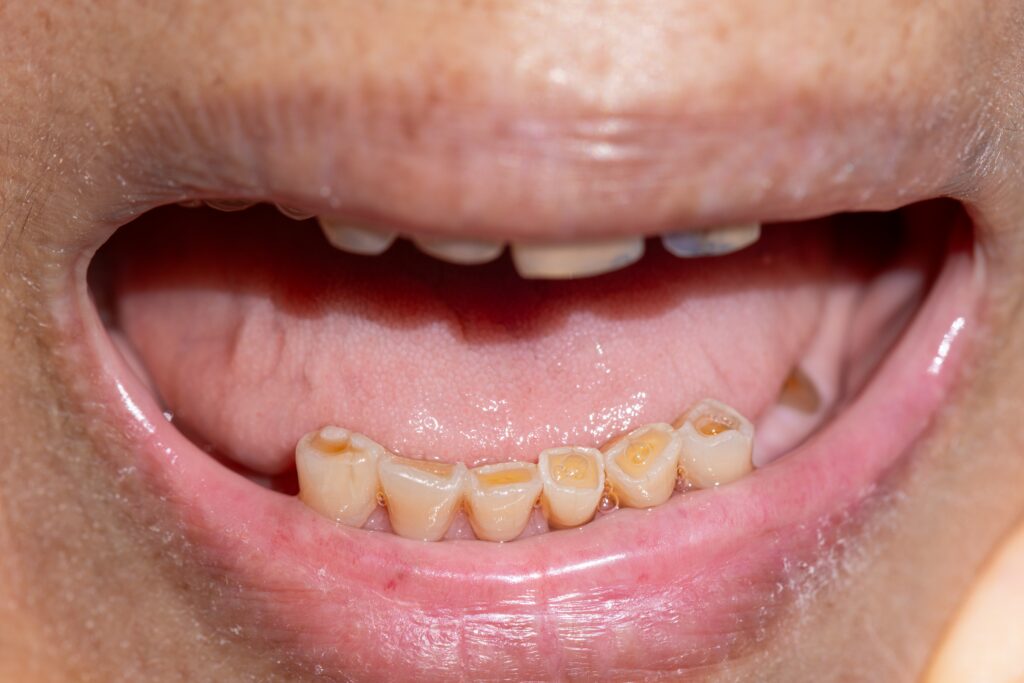
It’s normal for teeth to experience a small amount of wear over a lifetime. However, excessive tooth wear is not simply a normal part of aging. It is often a sign that something is placing excessive stress on your teeth or causing the enamel to gradually break down.
As teeth wear, they may become shorter, flatter, more sensitive, or more likely to crack or break. Identifying the cause early can often help prevent additional damage and preserve your natural teeth.
At Total Dentistry, Dr. Christopher Omeltschenko evaluates the health of your gums, teeth, and bite to determine why your teeth are wearing and recommend treatment designed to protect your long-term oral health.
What Causes Tooth Wear?
Several conditions may contribute to worn teeth, including:
- Teeth grinding (bruxism)
- Jaw clenching
- Excessive bite forces (occlusal dysfunction)
- Acid erosion from acidic foods, beverages, or stomach acid
- Normal aging
- Missing teeth that place additional stress on the remaining teeth
- Certain habits, such as chewing ice or biting hard objects
In many patients, tooth wear develops gradually over many years and results from a combination of factors.
Signs and Symptoms
Worn teeth may cause:
- Teeth that appear shorter or flatter
- Chipped or broken teeth
- Cracked teeth
- Tooth sensitivity
- Rough or uneven biting surfaces
- Frequent broken fillings or crowns
- Difficulty chewing
- Changes in your bite
- A smile that appears older due to shortened teeth
Some patients have significant tooth wear with very few symptoms, making routine examinations especially important.
How Are Worn Teeth Diagnosed?
Determining why teeth are wearing requires more than simply looking at them.
During your examination, Dr. Omeltschenko may evaluate:
- The amount and pattern of tooth wear
- Digital X-rays
- Clinical photographs
- Bite alignment
- Signs of grinding or clenching
- Missing teeth
- Existing restorations
- Gum health
The pattern of wear often provides important clues about the underlying cause.
What Happens If Tooth Wear Is Left Untreated?
Without treatment, excessive tooth wear may continue to progress.
Over time, this may lead to:
- Increasing tooth sensitivity
- Cracked teeth
- Broken fillings or crowns
- Shortened teeth
- Changes in your bite
- Loss of tooth structure
- More complex restorative treatment
Early intervention often allows treatment to be more conservative and predictable.
Possible Treatment Options
Treatment depends on the severity of the wear and its underlying cause.
Possible treatment options include:
- Custom Nightguard – If grinding or clenching is contributing to the wear, a professionally made nightguard can help protect your teeth from further damage.
- Bite Analysis & DTR Therapy – If excessive bite forces are contributing to tooth wear, computerized T-Scan® analysis and, for appropriately selected patients, Disclusion Time Reduction (DTR) Therapy may help reduce harmful forces and improve long-term function.
- Tooth-Colored Fillings or Bonding – Mild wear may sometimes be repaired using tooth-colored restorative materials.
- Same-Day Crowns – Teeth that have lost significant structure may benefit from crowns to restore strength, appearance, and function.
- Comprehensive Bite Rehabilitation – For patients with extensive wear affecting many teeth, a more comprehensive treatment plan may be recommended to restore proper function and long-term stability.
Our goal is not simply to rebuild worn teeth, but to understand why they became worn so the results are designed to last.
Looking Beyond the Worn Teeth
Worn teeth are often a symptom of an underlying problem—not simply a cosmetic concern.
At Total Dentistry, we evaluate the health of your gums, teeth, and bite together because excessive wear frequently develops as a result of grinding, clenching, bite imbalances, missing teeth, or other contributing factors.
By identifying the cause, we can often reduce the risk of future damage while helping you maintain your natural teeth.
Frequently Asked Questions
Continue Exploring
━━━━━
Why Are My Teeth Wearing Down? →
Learn the most common causes of tooth wear and how early treatment can help protect your smile.
Teeth Grinding vs. Jaw Clenching →
Understand the differences between grinding and clenching, why they occur, and how each affects your teeth.
What Is Occlusal Dysfunction? →
Learn how an unhealthy bite can contribute to tooth wear, fractures, jaw discomfort, and other long-term dental problems.
Can Bite Problems Damage My Teeth? →
Discover how bite problems can lead to uneven wear, cracked teeth, gum recession, and other oral health concerns.
Do I Need a Nightguard? →
Find out who benefits from a custom nightguard and how it can help protect your teeth from grinding and clenching.
Ready to Get Started?
━━
Excessive tooth wear often develops gradually, making it easy to overlook until significant damage has occurred. Identifying the cause early can help protect your teeth and reduce the need for more extensive treatment in the future.
If you’ve noticed your teeth becoming shorter, flatter, more sensitive, or more prone to breaking, schedule an examination with Dr. Christopher Omeltschenko. We’ll evaluate the health of your gums, teeth, and bite, determine what’s causing the wear, and recommend treatment designed to protect your smile for years to come.