Missing Tooth in Cincinnati, OH
━━
Replacing a missing tooth helps restore your smile, improve chewing, and protect your remaining teeth. We’ll help you understand the options available for your unique needs.
What Happens When You Lose a Tooth?
Whether you’ve recently lost a tooth or it’s been missing for many years, replacing it is about more than restoring your smile. Missing teeth can affect the way you chew, speak, and even how the remaining teeth function over time.
The good news is that today’s dentistry offers several predictable ways to replace missing teeth. The best solution depends on your oral health, the number of missing teeth, and your long-term goals.
At Total Dentistry, Dr. Christopher Omeltschenko performs a comprehensive examination to help you understand your options and recommend the treatment that best supports your long-term oral health.
Why Do People Lose Teeth?
Teeth may be lost for many reasons, including:
- Advanced tooth decay
- Gum disease (periodontal disease)
- Cracked or fractured teeth
- Dental trauma
- Failed dental restorations
- Congenitally missing teeth
- Tooth extraction due to infection or damage
Understanding why a tooth was lost is often just as important as deciding how to replace it.
What Happens If a Missing Tooth Isn’t Replaced?
Not every missing tooth must be replaced, but leaving a space in your smile can lead to changes over time.
Depending on the location of the missing tooth, you may experience:
- Difficulty chewing certain foods
- Shifting of neighboring teeth
- Changes in your bite
- Increased wear on remaining teeth
- Loss of jawbone in the area of the missing tooth
- Changes in the appearance of your smile
- Additional stress on surrounding teeth
The sooner replacement options are considered, the more treatment possibilities are often available.
How Is a Missing Tooth Evaluated?
Choosing the right replacement begins with understanding your oral health as a whole.
During your examination, Dr. Omeltschenko may evaluate:
- The health of your gums
- The condition of neighboring teeth
- Bone levels using digital X-rays
- Your bite and chewing patterns
- The number and location of missing teeth
- Your long-term treatment goals
Rather than recommending the same solution for every patient, we help you understand the advantages and limitations of each option so you can make an informed decision.
Replacement Options
The best treatment depends on your individual needs.
Single Tooth Dental Implant
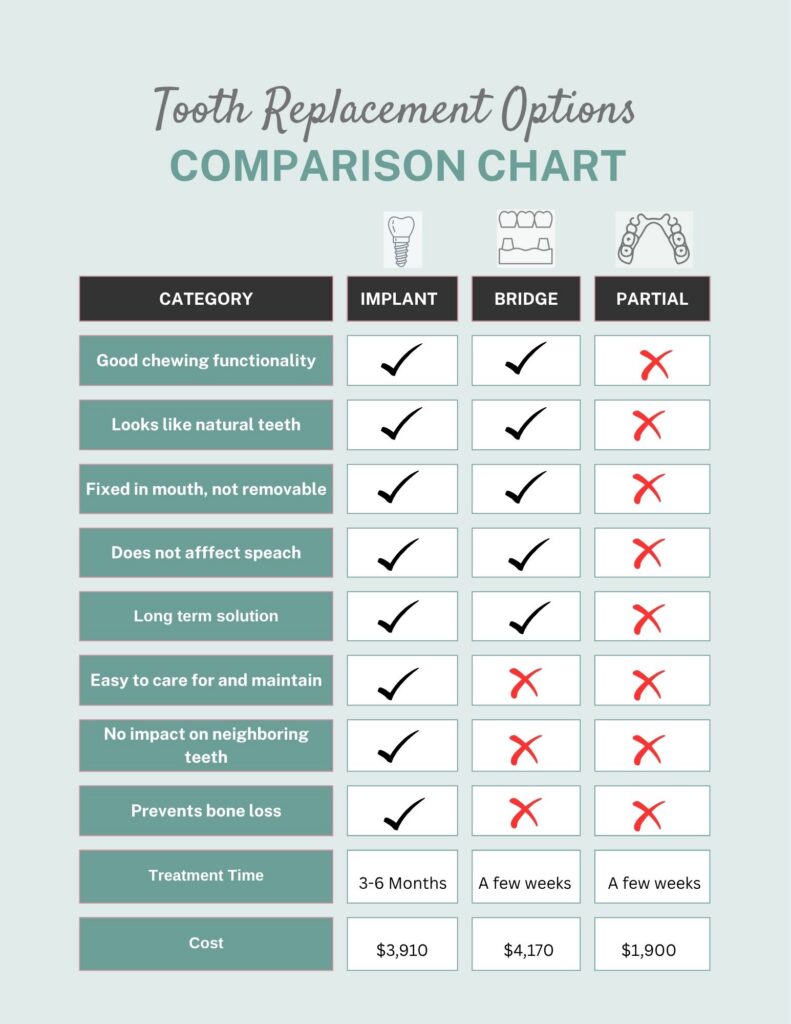
A dental implant replaces both the root and crown of a missing tooth without relying on neighboring teeth. It is often considered the closest replacement to a natural tooth and helps preserve jawbone over time.
Implant-Supported Bridge
When several teeth are missing in the same area, an implant-supported bridge may replace multiple teeth while using fewer implants than replacing each tooth individually.
Traditional Dental Bridge
A traditional bridge replaces a missing tooth by attaching to the neighboring teeth. This option may be appropriate in certain situations, particularly when the adjacent teeth already require crowns.
Partial Denture
A removable partial denture replaces one or more missing teeth and may be an effective option when several teeth are missing.
Implant-Supported Dentures
For patients missing many or all of their teeth, implant-supported dentures provide significantly greater stability, comfort, and chewing ability than traditional removable dentures.
Which Option Is Right for Me?
There is no single “best” replacement for every patient.
The right choice depends on factors such as:
- Your overall oral health
- The number of missing teeth
- Bone availability
- The condition of neighboring teeth
- Your long-term goals
- Your budget
We’ll review each appropriate option with you, explain the advantages and limitations, and help you choose the solution that best fits your needs.
Looking Beyond the Missing Tooth
At Total Dentistry, we believe replacing a missing tooth isn’t just about filling a space.
It’s about restoring healthy function while understanding why the tooth was lost in the first place. Whether the cause was decay, gum disease, excessive biting forces, or trauma, identifying the underlying reason helps protect your remaining teeth and reduce the risk of future problems.
That’s why every comprehensive examination evaluates the health of your gums, teeth, and bite—not just the missing tooth itself.
Frequently Asked Questions
Continue Exploring
━━━━━
What Is the Best Way to Replace a Missing Tooth? →
Compare the most common tooth replacement options and learn which may be right for your smile.
Dental Implant vs. Bridge: Which Is Right for You? →
Understand the differences between dental implants and bridges to help you make an informed decision.
What Happens If You Don’t Replace a Missing Tooth? →
Learn how a missing tooth can affect your bite, neighboring teeth, and long-term oral health.
How Long Do Dental Implants Last? →
Discover how long dental implants typically last and the habits that help ensure long-term success.
Are Dental Implants Worth It? →
Explore the long-term benefits of dental implants and why many patients consider them a worthwhile investment.
Ready to Get Started?
━━
Losing a tooth doesn’t mean you have to live with a gap in your smile or changes in the way you chew. Today’s dentistry offers several predictable ways to restore both function and appearance.
If you’re missing one or more teeth, schedule an examination with Dr. Christopher Omeltschenko. We’ll evaluate your oral health, explain your treatment options, and help you choose the solution that best supports your long-term oral health.