
Bleeding Gums in Cincinnati, OH
━━
Healthy gums shouldn’t bleed during brushing or flossing. Bleeding is often an early sign of gum disease and should be evaluated promptly.
Why Do My Gums Bleed When I Brush or Floss?
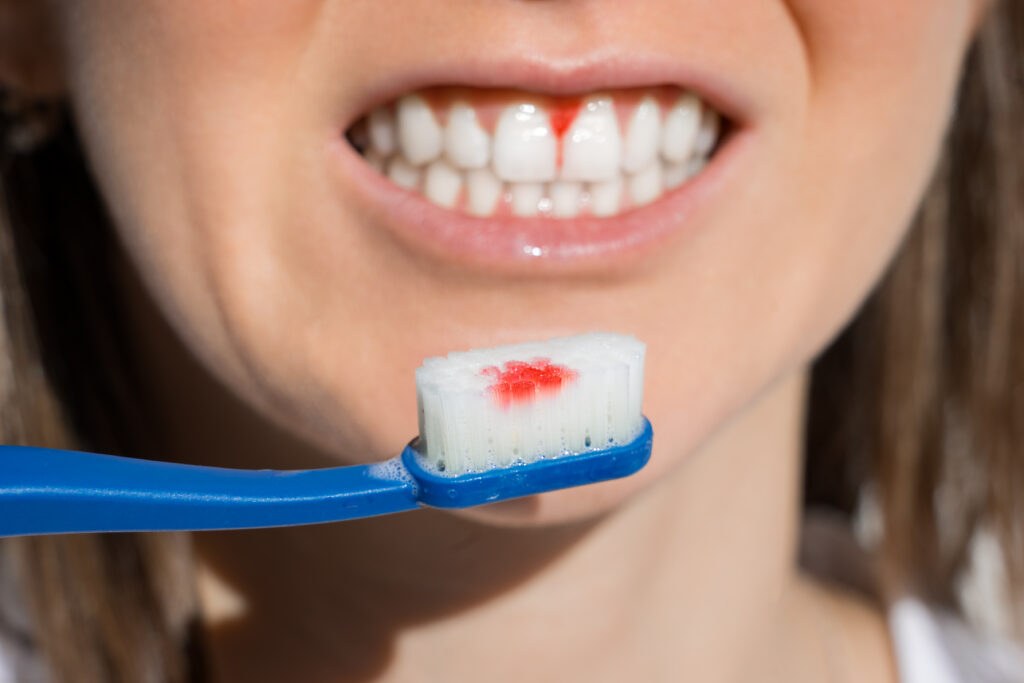
If your gums bleed when you brush or floss, it may be tempting to ignore it or assume you’re brushing too hard. In reality, bleeding gums are often one of the earliest signs of gum disease.
Healthy gums generally do not bleed. Bleeding is your body’s way of telling you that inflammation is present and that your gums need attention.
The good news is that when identified early, many causes of bleeding gums can be treated successfully before permanent damage occurs.
At Total Dentistry, Dr. Christopher Omeltschenko performs a comprehensive examination to determine why your gums are bleeding and recommend treatment designed to restore your gum health while helping you keep your teeth for life.
What Causes Bleeding Gums?
Bleeding gums can have several causes, including:
- Gingivitis (early gum disease)
- Periodontitis (advanced gum disease)
- Plaque and tartar buildup
- Inconsistent brushing or flossing
- Hormonal changes such as pregnancy
- Certain medications
- Tobacco use
- Medical conditions such as diabetes
The most common cause, however, is inflammation caused by bacteria accumulating around the teeth and beneath the gums.
Signs and Symptoms
Bleeding gums may occur along with:
- Bleeding while brushing or flossing
- Red or swollen gums
- Tender gums
- Persistent bad breath
- Gum recession
- Teeth that appear longer than before
- Loose teeth (in more advanced cases)
Many people experience very little discomfort, which is why gum disease often goes unnoticed until significant damage has occurred.
Should Bleeding Gums Be a Concern?
Yes.
While occasional bleeding may occur after vigorous brushing or flossing, gums that bleed regularly should be evaluated.
You should schedule an examination if:
- Your gums bleed frequently.
- Your gums appear swollen or red.
- You have persistent bad breath.
- Your gums seem to be pulling away from your teeth.
- Your teeth feel loose.
- It’s been several years since your gums have been professionally evaluated.
Early treatment is often much simpler than treating advanced gum disease.
How Are Bleeding Gums Diagnosed?
Determining why your gums are bleeding involves much more than simply looking at them.
During your examination, Dr. Omeltschenko may evaluate:
- The health of your gums
- Periodontal pocket measurements
- Gum recession
- Bleeding during periodontal probing
- Digital X-rays to evaluate bone levels
- Plaque and tartar accumulation
- Risk factors contributing to gum disease
By evaluating the health of your gums, teeth, and bite, we can identify the underlying cause of the inflammation and recommend the most appropriate treatment.
What Happens If Bleeding Gums Are Left Untreated?
Bleeding gums often represent the earliest stage of gum disease.
Without treatment, inflammation may progress to:
- Gingivitis
- Periodontitis
- Bone loss
- Gum recession
- Loose teeth
- Tooth loss
Research has also shown an association between gum disease and several systemic health conditions, including heart disease, diabetes, stroke, and other inflammatory conditions.
Treating gum disease benefits not only your oral health but may also contribute to your overall health.
Possible Treatment Options
Treatment depends on the underlying cause and severity of the inflammation.
Possible treatment options include:
- Professional Dental Cleaning – If the inflammation is limited to gingivitis, removing plaque and tartar combined with improved home care often allows the gums to heal.
- Periodontal Therapy (Scaling and Root Planing) – When infection has spread below the gumline and bone loss has begun, a deep cleaning may be recommended to remove bacteria from the root surfaces and help stabilize the disease.
- Periodontal Maintenance – Patients who have been treated for periodontal disease typically require more frequent maintenance visits to help keep the infection under control.
- Personalized Home Care Recommendations – We may recommend specific brushing techniques, flossing methods, interdental brushes, or water flossers to help you maintain healthy gums between visits.
Our goal is not simply to stop the bleeding, but to restore healthy gums and help prevent future disease.
Looking Beyond the Symptoms
Bleeding gums are often the first visible sign that something isn’t healthy.
At Total Dentistry, we believe successful treatment begins with understanding the health of your gums, teeth, and bite—not simply treating individual symptoms.
By identifying the cause of the inflammation early, we can often prevent more serious problems and help you maintain your natural teeth for many years to come.
Frequently Asked Questions
Continue Exploring
━━━━━
What Is Periodontitis? →
Learn what periodontitis is, how it damages the gums and supporting bone, and why early treatment matters.
What Is Gingivitis? →
Discover the earliest stage of gum disease, what causes it, and how it can often be reversed.
Why Do My Gums Bleed When I Floss? →
Find out why bleeding gums are not normal and what they may be telling you about your oral health.
Can Gum Disease Be Reversed? →
Learn when gum disease can be reversed, when it can only be managed, and the treatments that help protect your smile.
Why Are My Gums Receding? →
Explore the common causes of gum recession and the treatment options available to protect your teeth and gums.
Ready to Get Started?
━━
Bleeding gums are often the earliest warning sign of gum disease. Identifying the cause early can help prevent bone loss, tooth loss, and more extensive treatment in the future.
If your gums bleed when you brush or floss, schedule an examination with Dr. Christopher Omeltschenko. We’ll evaluate the health of your gums, explain what is causing the bleeding, and recommend a treatment plan designed to help you maintain a healthy smile for years to come.