
Impacted Tooth in Cincinnati, OH
━━
An impacted tooth may remain hidden beneath the gums while causing problems for neighboring teeth. A comprehensive evaluation helps determine whether treatment is needed.
What Is an Impacted Tooth?
An impacted tooth is a tooth that is unable to fully erupt into its normal position because it is blocked by another tooth, bone, or gum tissue. While wisdom teeth are the most commonly impacted teeth, other teeth—such as canines—can also become impacted.
Some impacted teeth cause no symptoms and simply require monitoring. Others may lead to pain, swelling, infection, or damage to neighboring teeth.
At Total Dentistry, Dr. Christopher Omeltschenko performs a comprehensive examination to determine whether an impacted tooth requires treatment and to help you understand your options.
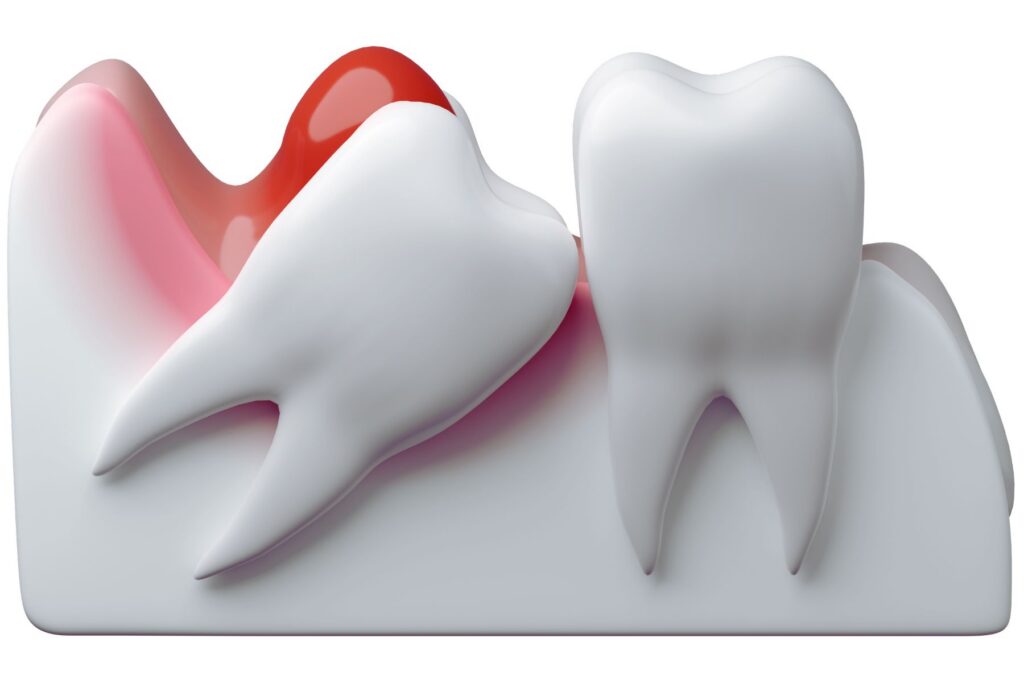
What Causes an Impacted Tooth?
A tooth may become impacted for several reasons, including:
- Lack of space in the jaw
- Crowding from neighboring teeth
- Abnormal tooth position or angle
- Delayed tooth eruption
- Thick gum or bone covering the tooth
- Genetics
Wisdom teeth are particularly prone to impaction because they are the last teeth to develop and often do not have enough room to erupt properly.
Signs and Symptoms
Some impacted teeth cause no symptoms and are discovered during routine dental X-rays.
When symptoms occur, they may include:
- Pain in the back of the mouth
- Swollen or tender gums
- Jaw discomfort
- Difficulty opening the mouth fully
- Food becoming trapped around a partially erupted tooth
- Bad breath or an unpleasant taste
- Swelling of the face or jaw
- Recurrent infections around the tooth
How Is an Impacted Tooth Diagnosed?
Impacted teeth are typically diagnosed during a comprehensive dental examination.
Your evaluation may include:
- Digital X-rays
- Clinical examination
- Evaluation of neighboring teeth
- Assessment of available space
- Examination of gum health
- Evaluation of any associated infection or damage
These findings help determine whether the tooth should be monitored or treated.
What Happens If an Impacted Tooth Is Left Untreated?
Not every impacted tooth requires treatment. However, some impacted teeth can lead to complications over time.
Potential problems include:
- Recurrent gum infections (pericoronitis)
- Pain or swelling
- Tooth decay
- Damage to neighboring teeth
- Gum disease
- Cyst formation (uncommon)
- Difficulty keeping the area clean
We’ll discuss whether treatment is recommended based on your specific situation rather than removing an impacted tooth simply because it is present.
Possible Treatment Options
Treatment depends on the position of the tooth, your symptoms, and its effect on your oral health.
Possible treatment options include:
- Monitoring – If the tooth is healthy, symptom-free, and not causing damage, periodic observation with routine examinations and X-rays may be appropriate.
- Improved Home Care – Partially erupted teeth may require special cleaning techniques to reduce plaque accumulation and inflammation.
- Tooth Extraction – If the impacted tooth is causing pain, infection, damage to neighboring teeth, or cannot be expected to function normally, removal may be recommended.
If extraction is recommended, we’ll explain why it’s appropriate and what to expect before, during, and after treatment.
Looking Beyond the Impacted Tooth
At Total Dentistry, treatment decisions are based on your overall oral health—not simply on what appears on an X-ray.
Some impacted teeth remain healthy for many years, while others become a source of pain, infection, or damage to neighboring teeth. Our goal is to recommend treatment only when it provides a clear long-term benefit to your oral health.
Related Conditions
Related Services
Frequently Asked Questions
Continue Exploring
━━━━━
Do All Wisdom Teeth Need to Be Removed? →
Learn when wisdom teeth should be removed and when they can be safely monitored.
What Is Pericoronitis? →
Understand what pericoronitis is, why it commonly affects wisdom teeth, and how it’s treated.
What to Expect After a Tooth Extraction →
Learn what to expect during recovery and the steps you can take to promote healing.
When Is a Tooth Extraction Necessary? →
Discover the most common reasons a tooth may need to be removed and the alternatives when available.
How Long Does Extraction Recovery Take? →
Find out how long recovery typically takes and what factors can affect the healing process.
Ready to Get Started?
━━
An impacted tooth doesn’t always require treatment, but it should be evaluated to determine whether it’s affecting your oral health.
If you’ve been told you have an impacted tooth or are experiencing pain, swelling, or difficulty around a partially erupted tooth, schedule an examination with Dr. Christopher Omeltschenko. We’ll evaluate your situation, explain your treatment options, and help you make an informed decision about your oral health.