Options for Replacing Missing Teeth
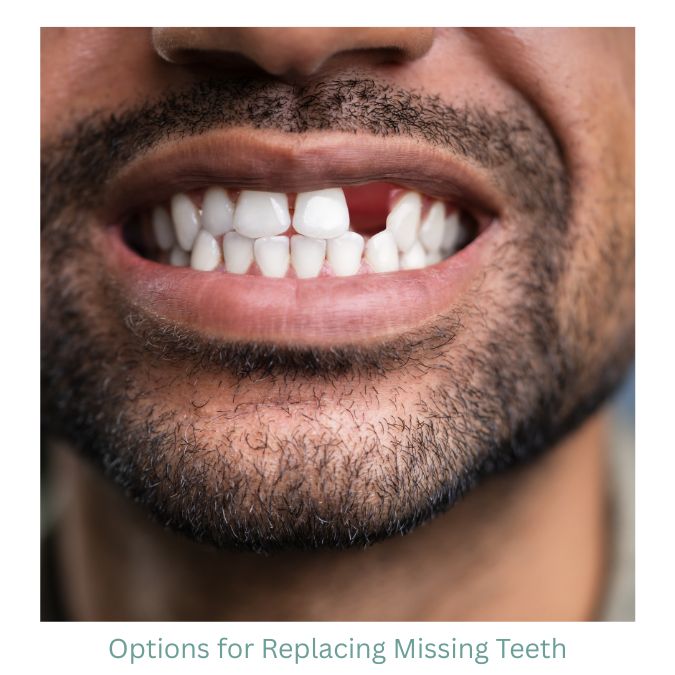
Missing teeth can affect more than your smile. They may impact chewing, speech, bite function, and long-term oral health. Fortunately, several treatment options are available to help restore comfort, function, and confidence.
Do Missing Teeth Need to Be Replaced?
Not every missing tooth must be replaced immediately, but it is generally worthwhile to understand the potential consequences of tooth loss.
Over time, missing teeth may contribute to:
- Bone loss
- Shifting of neighboring teeth
- Bite changes
- Difficulty chewing
- Increased wear on remaining teeth
- Changes in facial appearance
Replacing missing teeth can often help maintain oral health and improve function.
Which Tooth Replacement Option Is Best?
There is no single solution that is right for every patient.
The ideal treatment depends on factors such as:
- Number of missing teeth
- Location of missing teeth
- Gum health
- Bone support
- Condition of remaining teeth
- Bite function
- Overall health
- Personal goals
At Total Dentistry, we evaluate all of these factors when discussing replacement options.
Which Tooth Replacement Option Is Right for You?
Missing All of Your Teeth?
Compare traditional dentures, snap-in dentures, and fixed implant dentures.
Dental Implants
Dental implants replace both the root and visible portion of a missing tooth.
A titanium implant is placed into the jawbone and serves as the foundation for a replacement crown, bridge, or denture.
Benefits of Dental Implants
- Do not require altering neighboring teeth
- Help preserve jawbone support
- Function similarly to natural teeth
- Can replace one or multiple missing teeth
- Provide excellent long-term stability
Dental implants are often considered one of the most natural-feeling tooth replacement options available.
Dental Bridges
A dental bridge replaces a missing tooth by connecting an artificial tooth to neighboring teeth.
The teeth adjacent to the missing space are typically restored with crowns that support the bridge.
Benefits of Dental Bridges
- Fixed in place
- Does not require implant surgery
- Can restore chewing function and appearance
- May be an excellent option when neighboring teeth already need crowns
Bridges have successfully replaced missing teeth for many years and remain a valuable treatment option.
Partial Dentures
A partial denture is a removable appliance used when multiple teeth are missing but some natural teeth remain.
Partial dentures help restore:
- Chewing ability
- Appearance
- Function
They are generally less invasive than some fixed treatment options and can be an effective solution in appropriate situations.
Complete Dentures
When all teeth in an arch are missing, complete dentures may be used to replace them.
Dentures can restore:
- Appearance
- Speech
- Chewing function
- Facial support
Modern dentures are often more comfortable and natural-looking than many people expect.
Implant-Supported Dentures
Implant-supported dentures combine the benefits of dental implants with the replacement of multiple teeth.
Depending on the situation, implants may be used to:
- Stabilize a removable denture
- Support a fixed full-arch restoration
- Improve comfort and retention
Many patients appreciate the additional stability that implants can provide compared to traditional dentures.
Implant Bridges
When several adjacent teeth are missing, an implant bridge may be an option.
Rather than placing an implant for every missing tooth, strategically placed implants can support multiple replacement teeth.
This approach may help restore function while preserving bone support in the area.
What If I Am Missing Only One Tooth?
For a single missing tooth, common options often include:
- A dental implant and crown
- A traditional bridge
- In some situations, no treatment
The best choice depends on the condition of neighboring teeth, bone support, bite forces, and long-term goals.
What If I Am Missing Several Teeth?
When multiple teeth are missing, treatment options may include:
- Partial dentures
- Implant bridges
- Implant-supported dentures
- Combinations of different treatments
Each solution has advantages and limitations that should be discussed individually.
How We Help Patients Choose
At Total Dentistry, we believe tooth replacement decisions should consider more than simply filling a space.
We evaluate:
- Healthy gums
- Healthy teeth
- A healthy bite
Our goal is to recommend solutions that support long-term oral health, function, and comfort.
The best treatment is not always the most complex treatment—it is the one that best fits your oral health needs and goals.
The Bottom Line
Modern dentistry offers several effective ways to replace missing teeth.
Options may include dental implants, bridges, partial dentures, complete dentures, implant bridges, and implant-supported dentures.
Each solution has unique advantages, and the right choice depends on your individual situation.
If you are missing one or more teeth, contact Total Dentistry to schedule an examination and discuss the treatment options that may be right for you.