
Root Canal Treatment in Cincinnati, OH
━━
Relieve Pain and Save Your Natural Tooth
━━
Root canal treatment is one of the most misunderstood procedures in dentistry. Many patients feel anxious when they hear the words “root canal,” but in reality, it’s a predictable, comfortable procedure designed to eliminate pain, treat infection, and preserve your natural tooth.
At our Cincinnati (45239) dental office, Dr. Omeltschenko provides compassionate care to ensure your root canal experience is as smooth and stress-free as possible.
What Is a Root Canal?
━━
Inside each tooth is a small space called the pulp, which contains nerves and blood vessels. When the pulp becomes infected or inflamed — often due to deep decay, cracks, trauma, or repeated dental procedures — it cannot heal on its own.
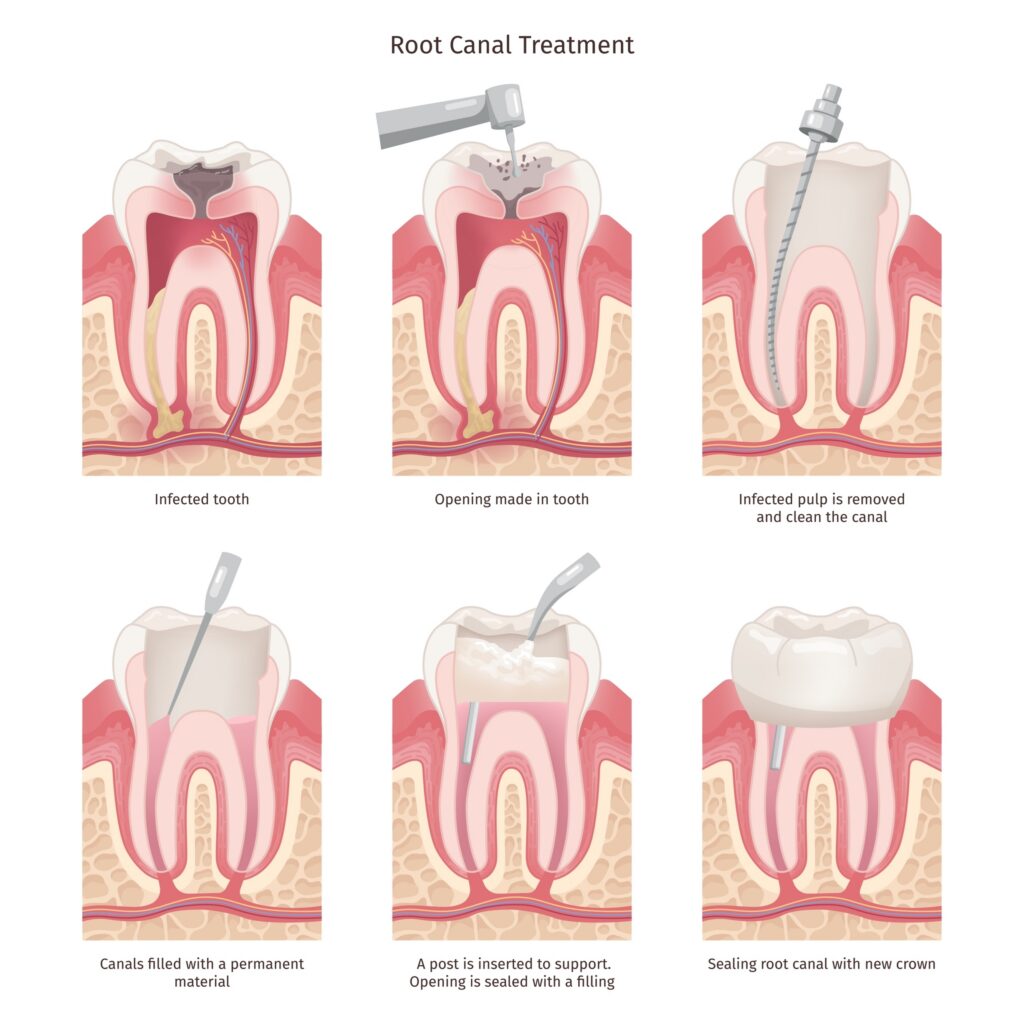
Root canal treatment involves:
- Removing the infected or inflamed pulp
- Cleaning and disinfecting the inside of the tooth
- Sealing the tooth to prevent reinfection
- Restoring the tooth so it functions normally
The goal is simple: eliminate infection, relieve pain, and save your natural tooth whenever possible.
Why You Might Need a Root Canal
━━
Common reasons for root canal treatment include:
Deep Decay
When a cavity reaches the pulp, bacteria invade the inner portion of the tooth. At this stage, a filling alone cannot stop the infection.
Cracked or Fractured Teeth
Cracks can allow bacteria to enter the pulp. Sometimes cracks are visible, and sometimes pain occurs when biting. Root canal treatment removes damaged tissue and prevents the infection from spreading.
Trauma
Even if a tooth looks intact, a blow can damage the pulp. Symptoms may appear immediately or develop months or years later.
Symptoms Indicating a Root Canal
━━
You may need treatment if you notice:
- Persistent toothache
- Sensitivity to hot or cold that lingers
- Pain when chewing
- Gum swelling or a pimple-like bump
- Darkening of the tooth
Sometimes no symptoms appear, and the issue is found during routine X-rays.
A Conservative Approach to Saving Teeth
━━
At Total Dentistry, preserving healthy natural teeth whenever possible is one of our core treatment philosophies.
When infection reaches the inside of a tooth, patients are often surprised to learn that extraction is not the only option. In many situations, root canal treatment allows us to eliminate infection while preserving the natural tooth structure, chewing function, and appearance.
Every situation is different. Our role is to carefully evaluate the condition of the tooth and recommend the most predictable, long-term solution based on your oral health and goals.
What Happens If It’s Not Treated?
━━
An untreated infection can:
- Spread into surrounding bone
- Cause an abscess
- Lead to swelling and significant pain
- Ultimately require tooth extraction
Saving your natural tooth whenever possible is the most conservative and beneficial approach for long-term oral health.
Why We Prefer to Save Your Tooth First
━━
Natural teeth are biologically designed to function in your mouth. They connect to the surrounding bone via a ligament that provides natural pressure feedback when chewing.
While dental implants are excellent replacements when a tooth cannot be saved, preserving your natural tooth maintains bone health, bite stability, and function for as long as possible — sometimes decades.
Even if the tooth eventually requires an implant, root canal treatment helps maximize the life and utility of your natural tooth.
What to Expect During the Procedure
━━
Root canal treatment is generally no more uncomfortable than having a filling placed:
- The area is fully numbed with local anesthesia
- You may feel pressure, but not pain
- The infected pulp is removed
- Canals are cleaned, shaped, and disinfected
- The tooth is sealed
Most patients are surprised at how smooth and pain-free the procedure is. Often, the discomfort they felt before treatment is what is truly relieved by the root canal.
Will My Tooth Need a Crown?
━━
In many cases, yes. Once the pulp is removed, the tooth can become more brittle, especially back teeth that endure heavy chewing forces.
In many cases, we can complete both the root canal treatment and the final crown in our office. This allows patients to receive comprehensive care from a team that already understands their dental history and treatment goals.
Our focus is not simply treating the infection, but restoring the tooth in a way that promotes long-term strength, comfort, and function.
A crown:
- Protects the treated tooth from fracture
- Restores full strength and function
- Helps maintain a long-lasting, healthy tooth
We evaluate each case individually to determine the best long-term restoration plan.
Recovery
━━
After treatment, mild soreness or tenderness when chewing is normal for a few days. Most patients return to normal activities the same day. Over-the-counter pain medication is typically sufficient.
Success Rate and Longevity
━━
Root canal treatment has a very high success rate. With proper restoration and good oral hygiene, a treated tooth can last for many years — often a lifetime. Regular dental checkups help ensure the tooth remains healthy.
Cost and Payment Options
━━━━━
We understand that root canal treatment is often unexpected and may occur during a stressful time.
Before treatment begins, we’ll review anticipated costs, insurance benefits, financing options, and answer any questions you may have.




Learn More About Root Canal Treatment
━━━━━
Signs You May Need a Root Canal →
Learn the common symptoms of an infected tooth and when root canal treatment may be needed.
Are Root Canals Painful? →
Discover what to expect during a root canal and why modern treatment is often no more uncomfortable than getting a filling.
What Causes Tooth Infections? →
Learn how deep decay, cracks, and dental injuries can lead to infections inside a tooth.
Root Canal vs. Extraction: Which Option Is Right for You? →
Compare the benefits of saving your natural tooth with a root canal versus replacing it after an extraction.
Do I Need a Crown After a Root Canal? →
Understand why many teeth need a dental crown after root canal treatment to restore strength and function.
How Long Do Root Canals Last? →
Discover how proper restoration and good oral hygiene can help a root canal-treated tooth last for many years.
Why Saving Natural Teeth Matters →
Learn why preserving your natural teeth is often the healthiest and most predictable long-term treatment option.
Frequently Asked Questions About Root Canal Treatment
Ready to Get Started?
━━
Schedule an examination with Dr. Omeltschenko to discuss your concerns, evaluate your oral health, and review your treatment options.