Comparing missing teeth options
━━
There Isn’t One “Best” Way to Replace Missing Teeth
━━
Losing teeth can affect much more than your appearance. Missing teeth can make it harder to chew comfortably, change the way you speak, allow neighboring teeth to shift, and contribute to bone loss over time.
Fortunately, modern dentistry offers several reliable solutions.
The best option depends on many factors, including how many teeth are missing, the health of your remaining teeth and gums, the condition of your jawbone, your budget, and your long-term goals.
At Total Dentistry, our goal isn’t to recommend the same treatment for everyone. Instead, we take the time to explain your options, answer your questions, and help you choose the solution that best fits your needs.
Which Tooth Replacement Option Is Right for You?
Missing All of Your Teeth?
Compare traditional dentures, snap-in dentures, and fixed implant dentures.
One or Several Missing Teeth
━━
Replacing One or Several Missing Teeth
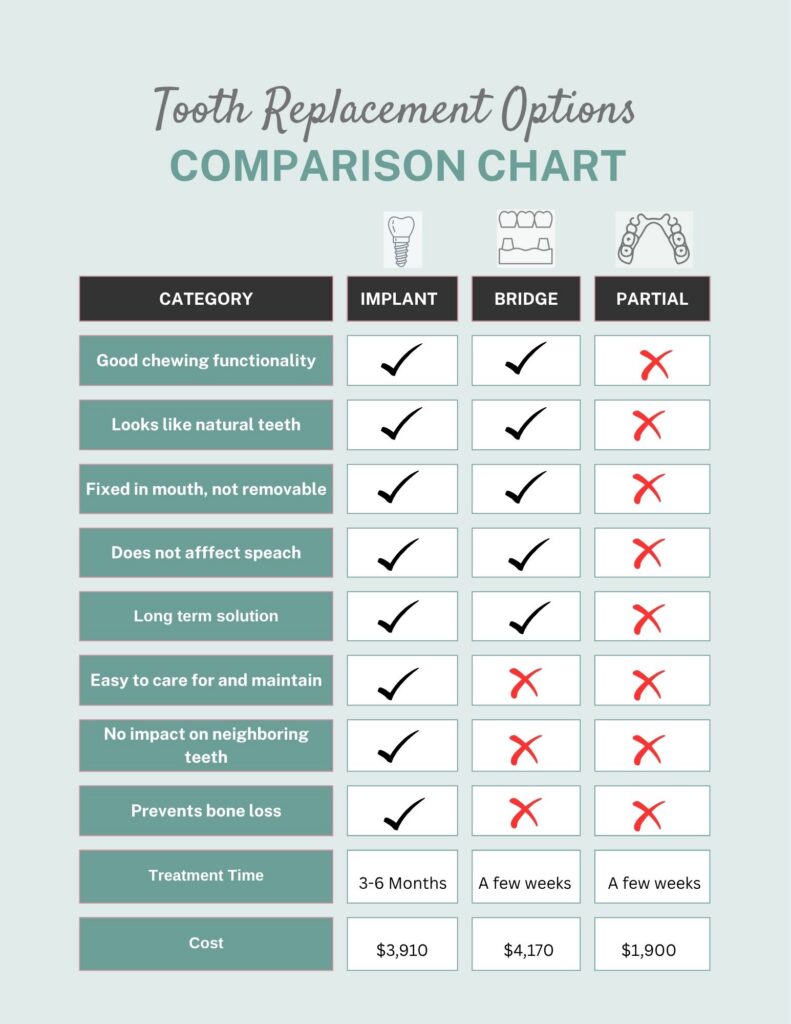
If you’re missing one tooth or several teeth but still have healthy natural teeth remaining, there are three primary treatment options.
Dental Implants
A dental implant replaces both the missing tooth root and the visible tooth, creating a restoration that looks, feels, and functions much like a natural tooth. Because implants stand on their own, they don’t rely on neighboring teeth for support and help preserve the surrounding jawbone.
Best for: Patients looking for the closest replacement to a natural tooth and a long-term solution.
Dental Bridges
A dental bridge fills the space left by a missing tooth by attaching an artificial tooth to crowns placed on the neighboring teeth. Bridges provide excellent function and aesthetics while completing treatment more quickly than dental implants.
Best for: Patients with healthy supporting teeth who want a fixed solution without implant surgery.
Partial Dentures
A removable partial denture replaces one or several missing teeth using a custom appliance that attaches to your remaining teeth. Partial dentures are often the most economical way to replace multiple missing teeth and can be an excellent solution for many patients.
Best for: Patients seeking an affordable, removable option for replacing several missing teeth.
Full Arch Replacement
━━
Replacing All Teeth in an Upper or Lower Arch
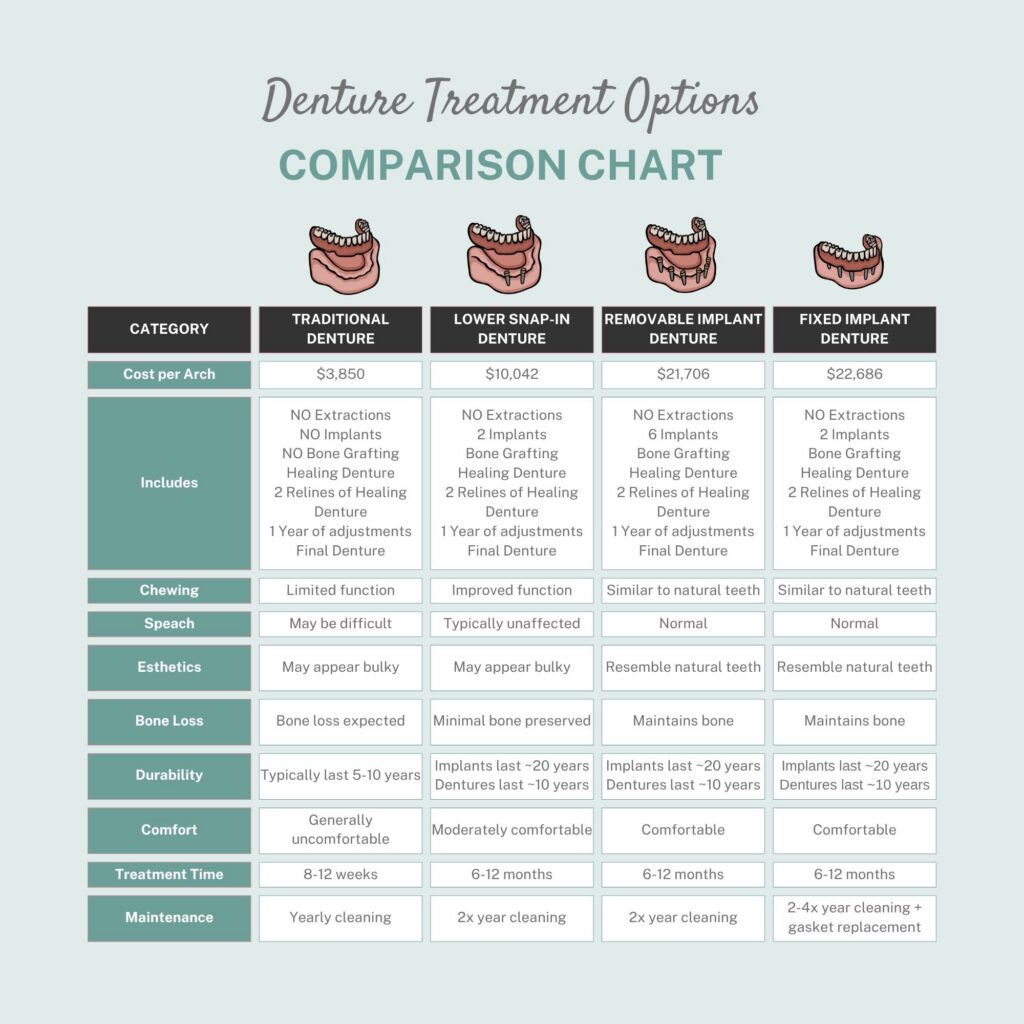
When all of the teeth in an upper or lower arch are missing—or need to be replaced—you have several treatment options that differ in comfort, stability, maintenance, appearance, and cost.
Traditional Dentures
Traditional dentures rest directly on the gums and replace an entire arch of missing teeth without dental implants. They remain one of the most affordable treatment options and can restore appearance and basic chewing ability.
Best for: Patients looking for the most economical full-arch tooth replacement.
Snap-In Implant Dentures
Snap-in dentures attach securely to dental implants while remaining removable for cleaning. They offer greater stability than traditional dentures and can significantly improve chewing comfort and confidence.
Best for: Patients wanting improved stability while still removing their denture each day.
Fixed Implant Dentures
Fixed implant dentures are permanently attached to dental implants and are only removed by your dentist for maintenance. They provide the closest experience to having natural teeth and offer excellent chewing ability, comfort, and confidence.
Best for: Patients seeking the most stable, natural-feeling full-arch tooth replacement available.
Understanding the Comparison Charts
━━
Looking Beyond Cost Alone
It’s natural to compare treatment options based on price, but cost is only one part of the decision.
When comparing tooth replacement options, it’s also important to consider:
- Long-term durability
- Comfort
- Chewing ability
- Appearance
- Maintenance requirements
- Treatment time
- Effect on neighboring teeth
- Bone preservation
- Future replacement costs
Sometimes a treatment with a higher initial investment may provide greater long-term value by lasting longer, preserving bone, or reducing future dental treatment.
Which Option Is Right for You?
━━
No comparison chart can tell you exactly which treatment is best for your smile.
Every patient’s situation is unique. Factors such as your oral health, jawbone, bite, medical history, lifestyle, and personal goals all influence which options are appropriate.
That’s why every recommendation at Total Dentistry begins with a comprehensive examination—not simply identifying what’s missing, but understanding why and determining which solution will provide the healthiest long-term outcome.
We’ll explain every appropriate option, discuss the advantages and limitations of each, and help you make a decision you can feel confident about.
Frequently Asked Questions
Ready to Get Started?
━━
Schedule an examination with Dr. Omeltschenko to discuss your concerns, evaluate your oral health, and review your treatment options.