Canker Sores in Cincinnati, OH
━━
Canker sores are common mouth ulcers that can make eating and speaking uncomfortable. Although they usually heal on their own, treatment may help reduce discomfort.
What Are Canker Sores?
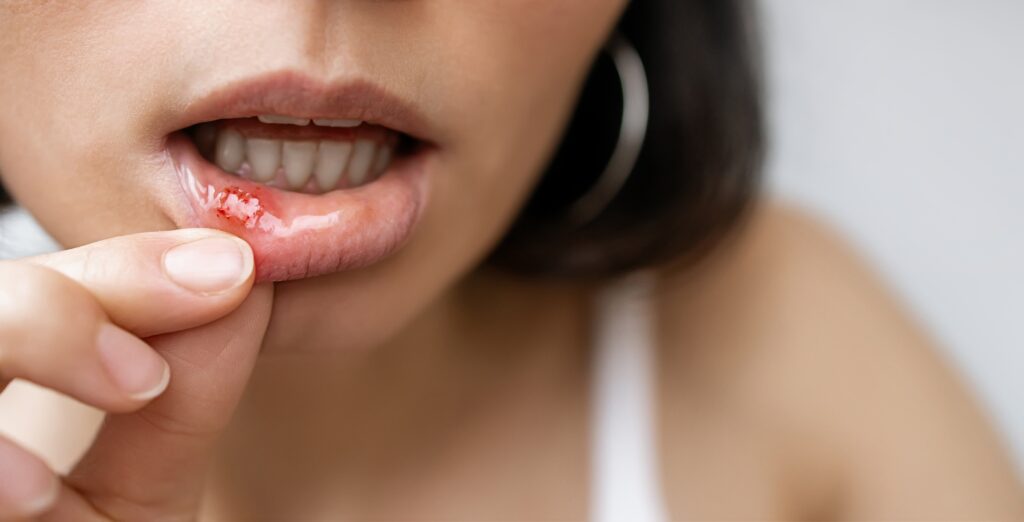
Canker sores, also called aphthous ulcers, are small, painful sores that develop inside the mouth. They most commonly appear on the inside of the lips or cheeks, the tongue, the gums, or the soft palate.
Although they can be uncomfortable, canker sores are not contagious and are not caused by an infection. Most heal on their own within one to two weeks without leaving a scar.
At Total Dentistry, Dr. Christopher Omeltschenko can evaluate mouth sores to determine whether they are typical canker sores or another condition that may require different treatment.
What Causes Canker Sores?
The exact cause of canker sores isn’t always known, but several factors may increase the likelihood of developing them.
Common triggers include:
- Minor injury from biting your cheek or tongue
- Stress
- Hormonal changes
- Certain foods, such as citrus fruits or spicy foods
- Toothbrush trauma
- Vitamin or mineral deficiencies
- Certain medical conditions
- Family history
Many people experience canker sores occasionally throughout their lives.
Signs and Symptoms
Canker sores typically appear as:
- A small round or oval sore
- A white, yellow, or gray center
- A red border surrounding the sore
- Pain when eating, drinking, or speaking
Some people notice a burning or tingling sensation a day or two before the sore becomes visible.
How Are Canker Sores Diagnosed?
Most canker sores can be diagnosed during a routine oral examination.
Dr. Omeltschenko will evaluate:
- The size and appearance of the sore
- Its location
- How long it has been present
- Whether similar sores occur frequently
- Any other symptoms you may be experiencing
If a sore has an unusual appearance or does not heal as expected, additional evaluation may be recommended.
How Long Do Canker Sores Last?
Most canker sores heal on their own within 7 to 14 days.
During that time, the discomfort gradually improves, and the tissue returns to normal without treatment.
Larger sores may take longer to heal.
Possible Treatment Options
Most canker sores heal without professional treatment.
To help reduce discomfort, we may recommend:
- Warm Saltwater Rinses – Gentle rinses may help keep the area clean and soothe irritated tissues.
- Avoiding Irritating Foods – Spicy, acidic, or crunchy foods may increase discomfort while the sore heals.
- Over-the-Counter Products – Protective gels or topical medications may temporarily reduce pain.
- Prescription Medication – For severe or recurring sores, prescription topical medications may be appropriate.
The goal of treatment is to reduce discomfort while the sore heals naturally.
Looking Beyond the Sore
Most canker sores are harmless and resolve without complications.
However, sores that are unusually large, recur frequently, or fail to heal within two weeks should be evaluated. Occasionally, persistent mouth sores may be associated with other medical conditions or require additional investigation.
At Total Dentistry, we carefully examine any oral lesion that does not follow a normal healing pattern.
Canker Sores vs. Cold Sores
Although they are often confused, canker sores and cold sores are different conditions.
Canker sores:
- Occur inside the mouth
- Are not contagious
- Are not caused by a virus
Cold sores:
- Usually develop on the lips or around the mouth
- Are caused by the herpes simplex virus (HSV-1)
- Are contagious until healed
An examination can help determine which type of sore you have.
Related Conditions
- Oral Candidiasis (Thrush)
- Tooth Injury
- Trauma to the Mouth
Related Services
Frequently Asked Questions
Continue Exploring
━━━━━
Canker Sores vs. Cold Sores: What’s the Difference? →
Learn how to tell the difference between canker sores and cold sores and why it matters.
Why Do I Keep Getting Canker Sores? →
Discover the common causes of recurring canker sores and what may help reduce future outbreaks.
When Should You Worry About a Mouth Sore? →
Learn which mouth sores heal on their own and when it’s time to see a dentist.
How to Relieve Canker Sore Pain →
Explore simple ways to reduce discomfort and help canker sores heal more comfortably.
How to Improve Your Home Oral Hygiene Routine →
Build a daily routine that helps keep your teeth and gums healthy between dental visits.
Ready to Get Started?
━━
Most canker sores heal on their own within a week or two. However, any sore that persists, recurs frequently, or doesn’t appear to be healing normally should be professionally evaluated.
If you’re concerned about a painful sore in your mouth, schedule an examination with Dr. Christopher Omeltschenko. He’ll determine the cause, answer your questions, and recommend the most appropriate treatment to help keep your mouth healthy.