Dental Erosion in Cincinnati, OH
━━
Acid erosion gradually dissolves tooth enamel and cannot be reversed once it is lost. Identifying the cause early helps slow progression and protect your teeth.
What Is Dental Erosion?
Dental erosion is the gradual loss of tooth enamel caused by acids—not bacteria. Unlike cavities, which are caused by bacteria producing acid, dental erosion occurs when acids from foods, beverages, or the stomach repeatedly dissolve the outer surface of the teeth.
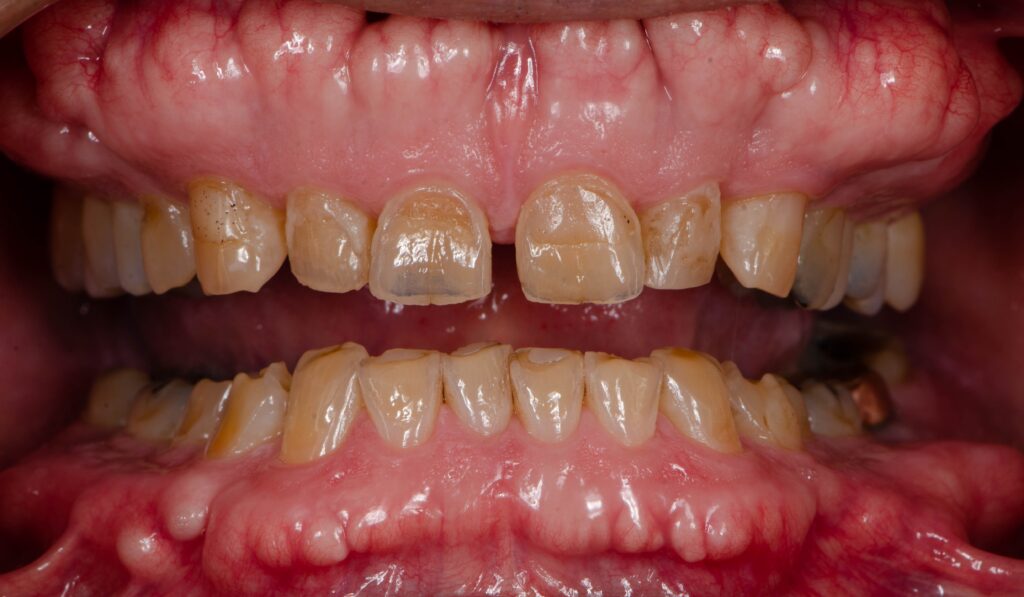
As enamel wears away, teeth can become thinner, more sensitive, more prone to chipping, and increasingly vulnerable to damage.
At Total Dentistry, Dr. Christopher Omeltschenko evaluates the health of your teeth, gums, and bite to determine whether dental erosion is affecting your smile and identify the underlying cause before recommending treatment.
What Causes Dental Erosion?
Dental erosion develops when teeth are repeatedly exposed to acid over time.
Common causes include:
- Acid reflux (GERD)
- Frequent vomiting
- Citrus fruits and juices
- Soft drinks and sports drinks
- Energy drinks
- Wine
- Frequent consumption of acidic foods
- Dry mouth, which reduces the protective effects of saliva
Unlike tooth decay, erosion is not caused by bacteria. Instead, acid directly dissolves the enamel, making the teeth weaker over time.
Signs and Symptoms
Dental erosion may cause:
- Sensitive teeth
- Teeth that appear thinner or more transparent
- Smooth or shiny tooth surfaces
- Rounded edges on the teeth
- Yellowing teeth as enamel becomes thinner
- Small chips along the edges of teeth
- Teeth that appear shorter over time
In its early stages, dental erosion often develops without pain.
How Is Dental Erosion Diagnosed?
During your examination, Dr. Omeltschenko carefully evaluates your teeth for patterns of enamel loss.
This may include:
- Clinical examination
- Digital photographs
- Digital X-rays
- Assessment of tooth wear patterns
- Review of your diet and beverage habits
- Discussion of acid reflux or other medical conditions
- Evaluation of your bite
Because erosion and grinding can produce different wear patterns, identifying the underlying cause is an important part of treatment planning.
What Happens If Dental Erosion Is Left Untreated?
Without addressing the source of the acid exposure, erosion may continue to progress.
Over time, this may result in:
- Increased tooth sensitivity
- Progressive enamel loss
- Chipped or fractured teeth
- Changes in the appearance of your smile
- Shortened teeth
- More extensive restorative treatment
The earlier erosion is identified, the more conservative treatment can often be.
Possible Treatment Options
Treatment depends on the severity of the erosion and its underlying cause.
Possible treatment options include:
- Reducing Acid Exposure – Identifying and managing dietary or medical sources of acid is often the most important step in preventing further enamel loss.
- Fluoride and Remineralization Strategies – In some situations, fluoride products or other preventive treatments may help strengthen remaining enamel and reduce sensitivity.
- Tooth-Colored Bonding or Fillings – Mild areas of enamel loss may sometimes be restored with tooth-colored materials.
- Same-Day Crowns – Teeth with extensive enamel loss or structural damage may require crowns to restore strength, function, and appearance.
- Bite Evaluation – If grinding or excessive bite forces are also contributing to tooth wear, additional evaluation may be recommended to determine whether bite therapy could benefit your long-term oral health.
Our goal is to preserve as much healthy tooth structure as possible while preventing future damage.
Looking Beyond the Worn Teeth
Dental erosion is often only one part of the picture.
Some patients experience erosion from acid exposure alone. Others have erosion combined with grinding, clenching, or excessive bite forces, accelerating the loss of tooth structure.
At Total Dentistry, we evaluate the health of your gums, teeth, and bite together to determine why your teeth are wearing and develop a treatment plan designed for long-term success.
Frequently Asked Questions
Continue Exploring
━━━━━
Tooth Wear vs. Dental Erosion: What’s the Difference? →
Learn the difference between tooth wear and dental erosion, and why identifying the cause matters.
Can Acid Reflux Damage Your Teeth? →
Discover how acid reflux can wear away tooth enamel and what you can do to protect your smile.
Why Are My Teeth Becoming Sensitive? →
Explore the common causes of tooth sensitivity and when it may be a sign of a more serious problem.
How to Protect Your Enamel →
Learn practical steps to strengthen and protect your enamel from everyday wear and acid damage.
Why Are My Teeth Wearing Down? →
Discover the most common causes of tooth wear and how early treatment can help prevent further damage.
Ready to Get Started?
━━
Dental erosion often develops gradually and may not cause symptoms until significant enamel has already been lost. Early diagnosis can help preserve your natural teeth and reduce the need for more extensive treatment.
If you’ve noticed increasing tooth sensitivity, thinning enamel, or changes in the appearance of your teeth, schedule an examination with Dr. Christopher Omeltschenko. He’ll evaluate the health of your gums, teeth, and bite, identify the cause of the erosion, and recommend treatment designed to protect your smile for years to come.